
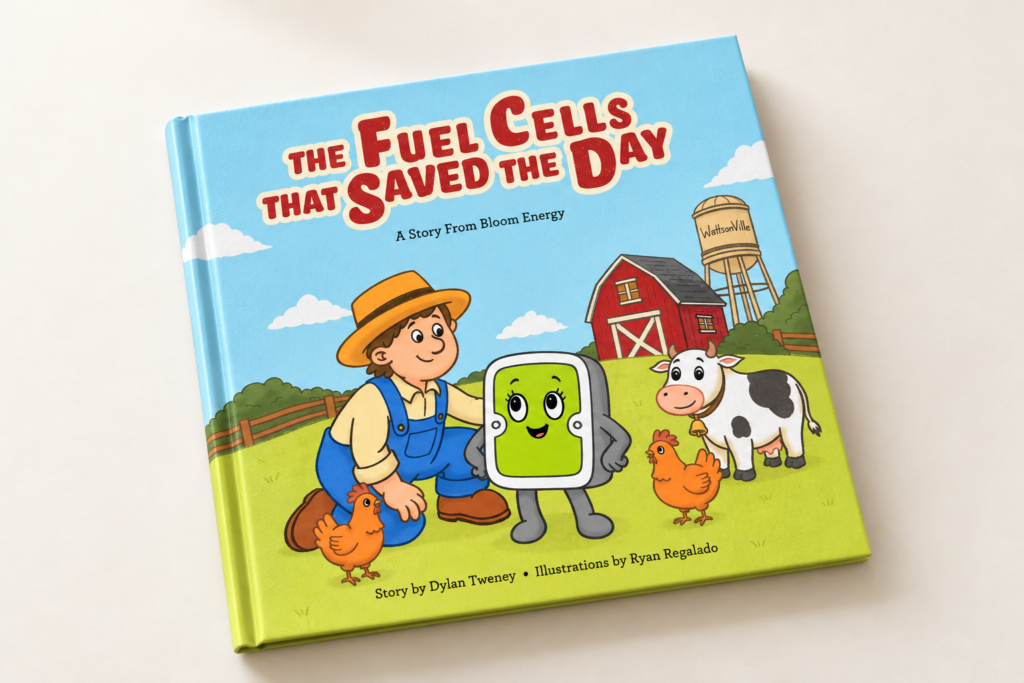
The Fuel Cells That Saved the Day began with a creative challenge: how could a story make clean-energy technology understandable and memorable for young readers?
My process for this project moved from broad visual research to rough sketches, character development, world-building, story pacing, and final illustration. Each phase helped answer a different question and gave the book a stronger foundation before the finished art began.
The story from Bloom Energy takes place in a small town near farm land. I was born and raised in Los Angeles and have never set foot on a farm. I’m thankful for my friends at SCBWI in Austin, Texas that provided a ton of insight from their time growing up on their family’s land where barns and windmills abound.
1. Research: finding the emotional world
I start by looking for the feeling a book needs to leave with a reader.
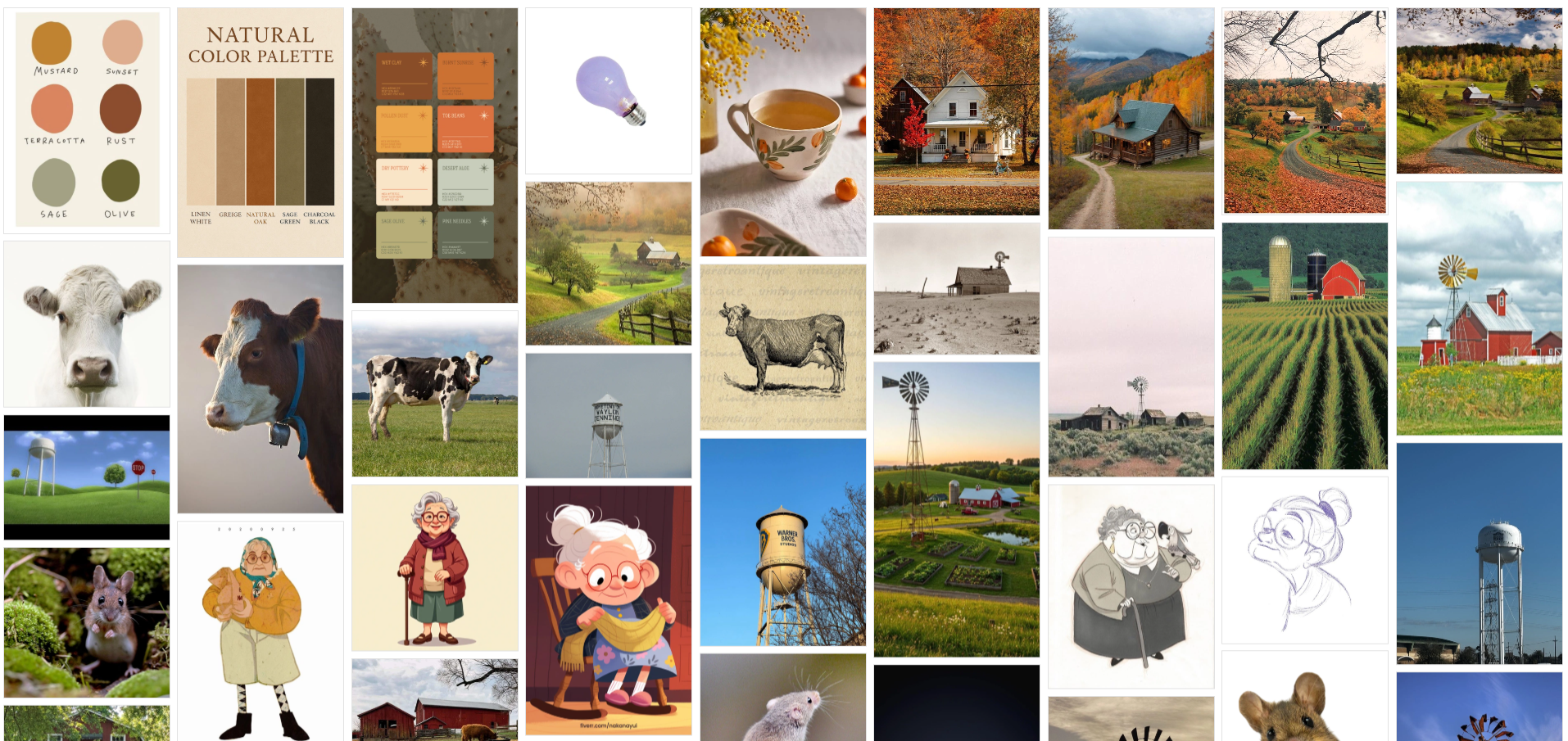
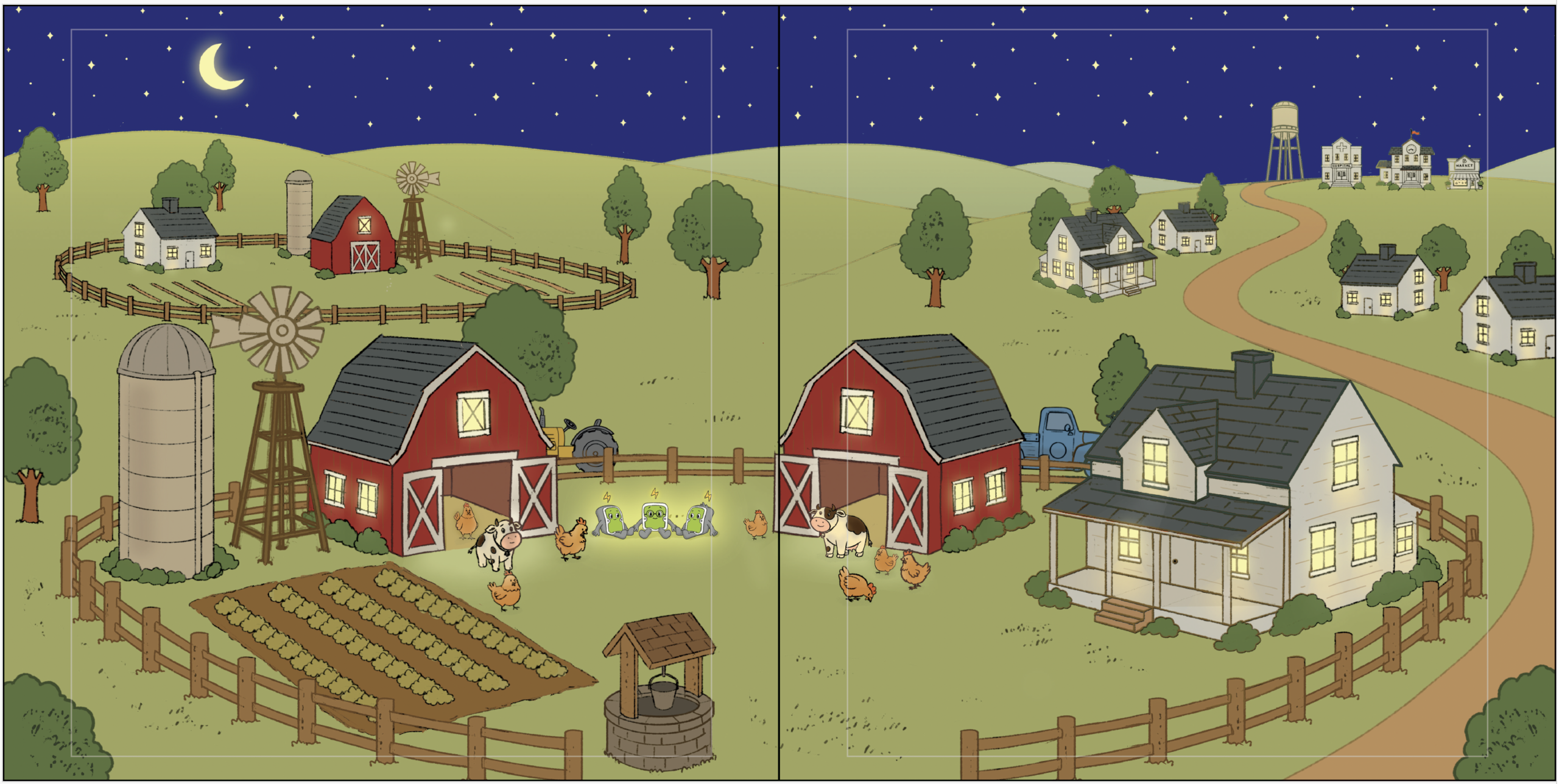
For this story, I wanted the world to feel cozy and inviting: glowing reading lights in a barn, a peaceful farm at night, and the safety of neighbors looking after one another. Moodboards were created to target the theme that aligned with the book’s manuscript.
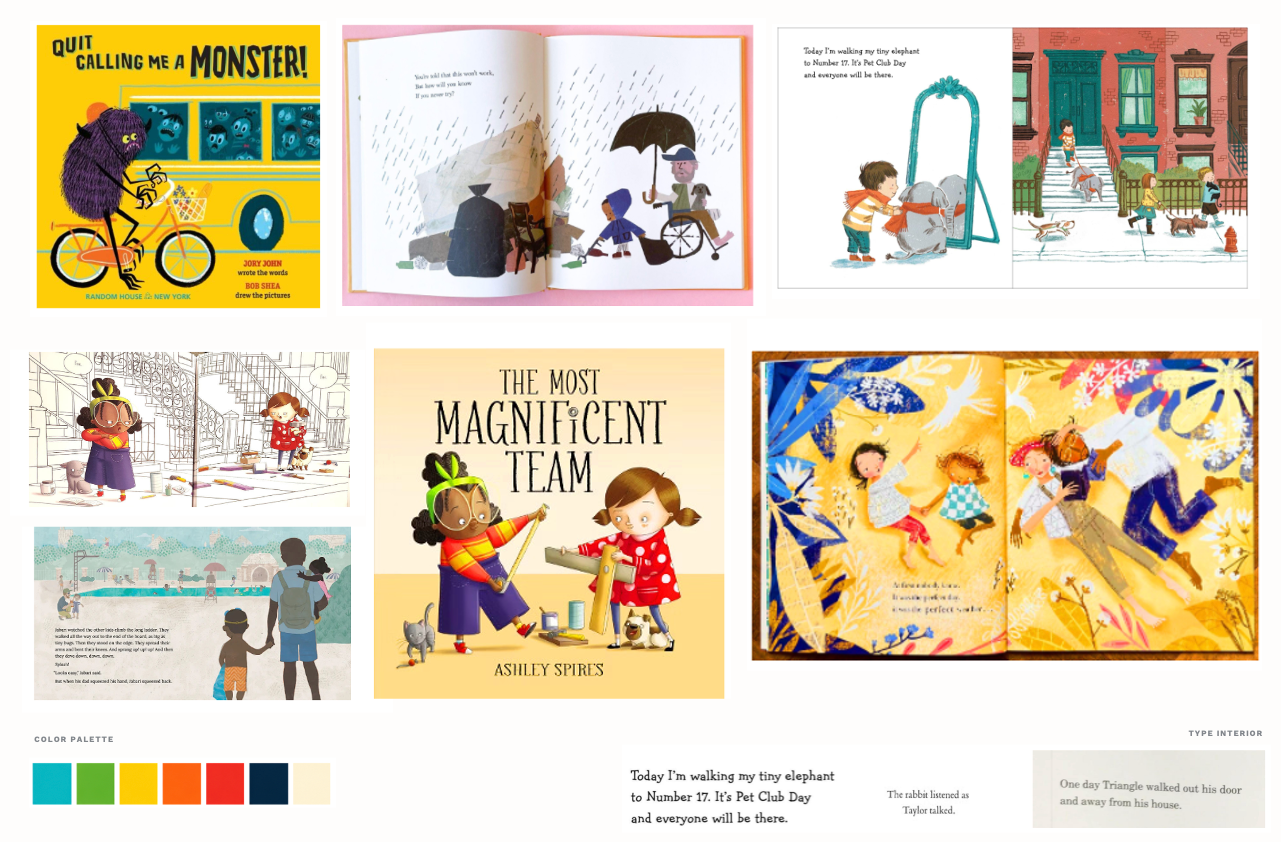
I collected visual references for farm life, bedtime rituals, rural landscapes, nighttime color palettes, and the physical details of Bloom’s fuel-cell technology.
This research gave me a visual north star. The direction was technology needed to feel present in the world, but never overpower the heart of the story.
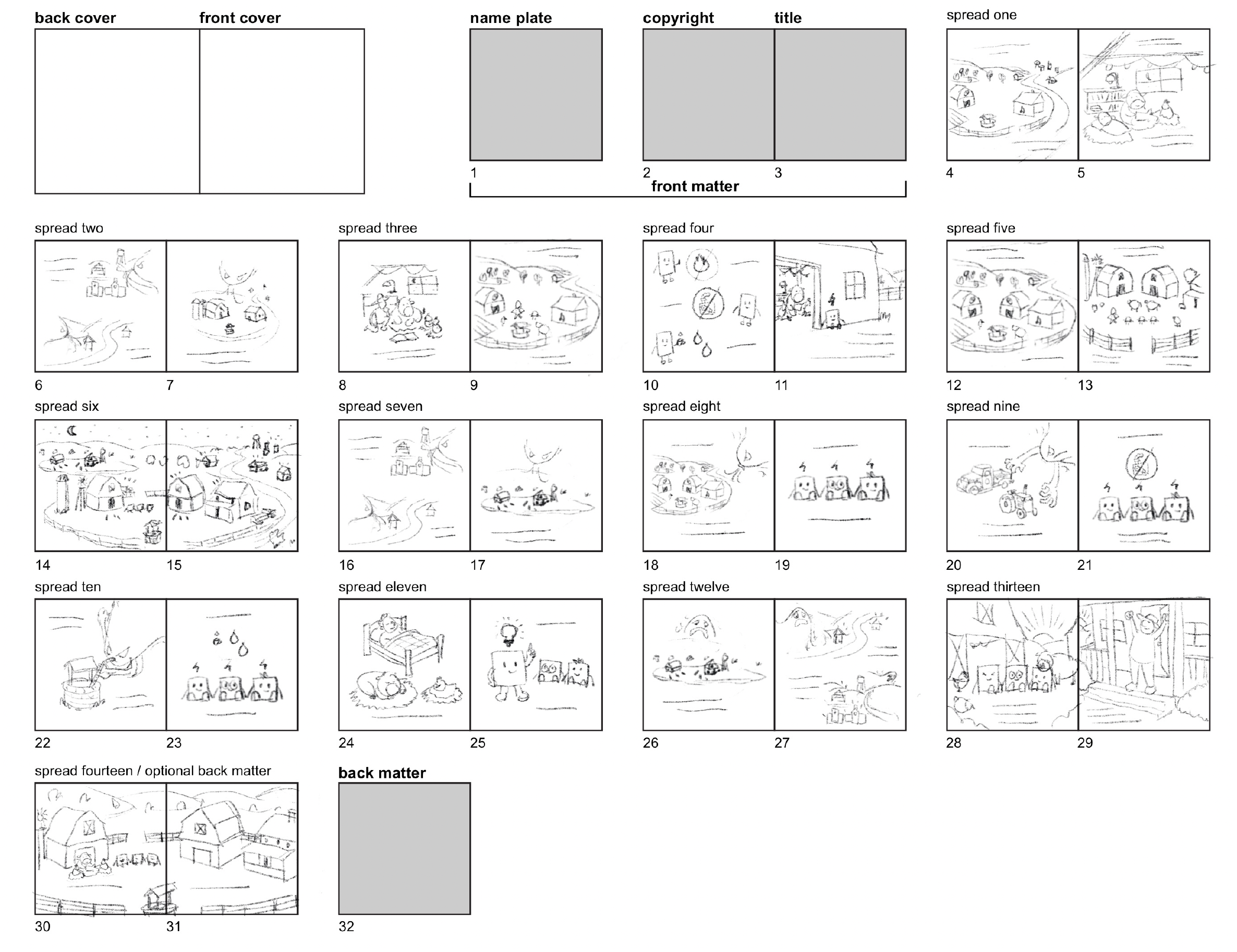
2. Analog sketches: finding the story before the detail
Before refining anything, I work small and loose.
Thumbnail sketches let me test out characters and their personalities, along with emotions and different parts of the world they live in. I can ask simple but important questions:
- What do the characters look like?
- What type of world do they live in?
- Who do they interact with?
- What type of challenges do they have?
- What is their daily routine?
- What do they love doing?
- How does the area they are part of affect them?
- How do they affect the world around them?
Drawing is thinking. These early drawings are where I discover the book.
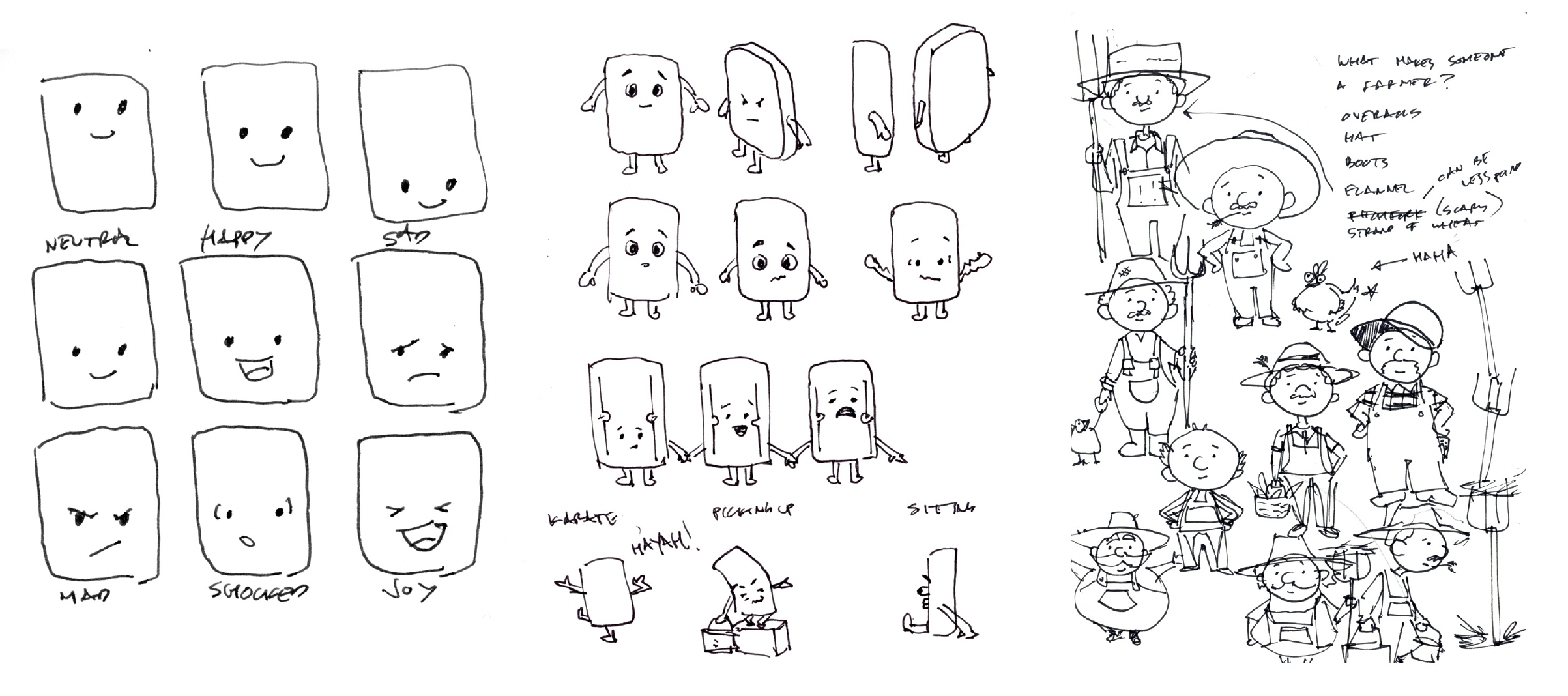
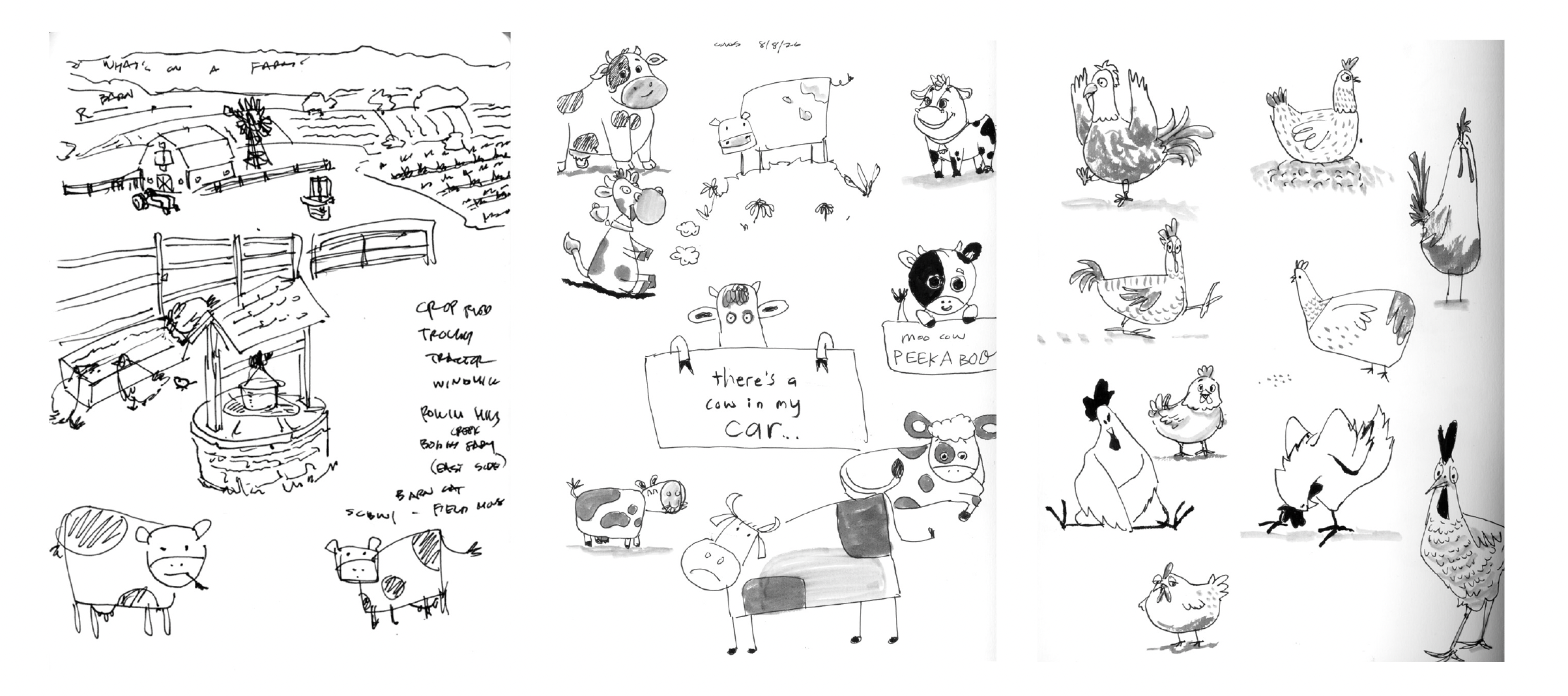
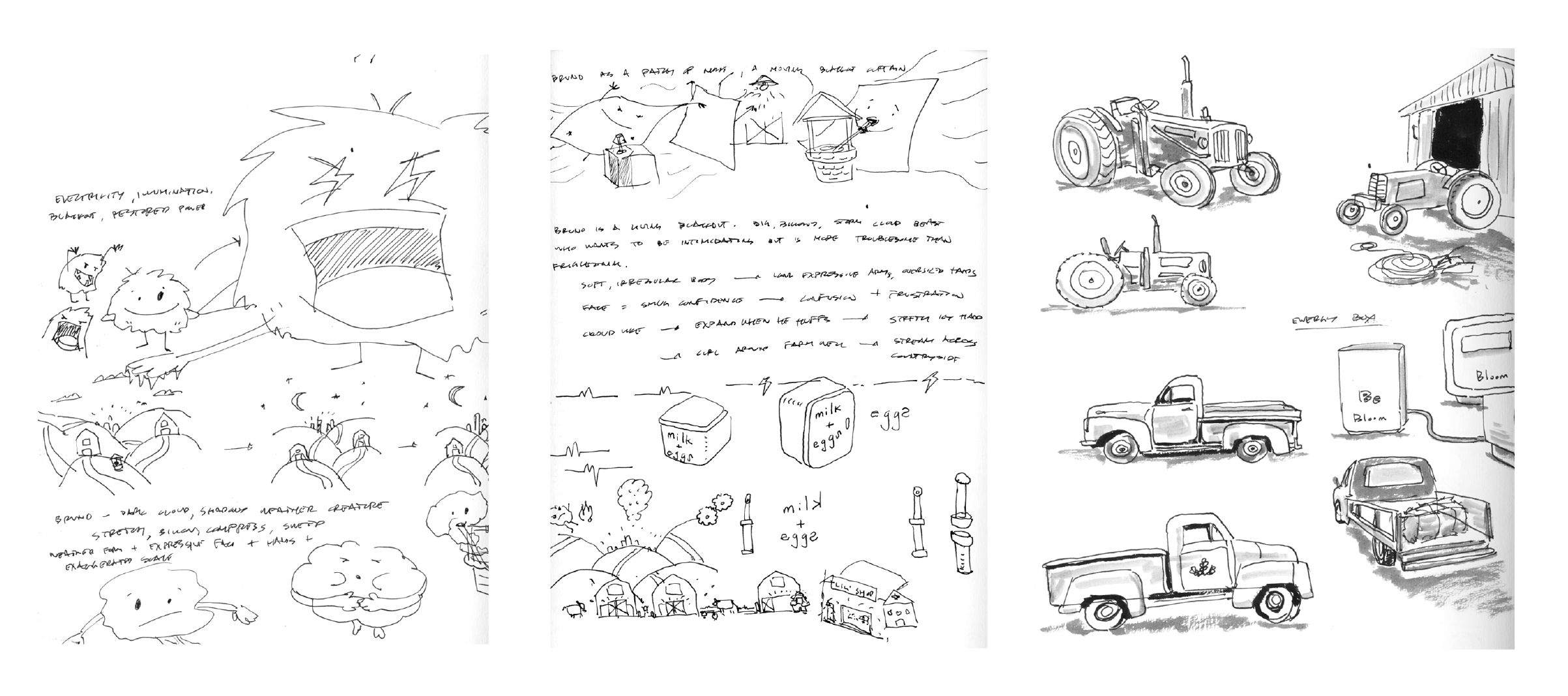
3. Character and expression sheets: giving the idea a personality
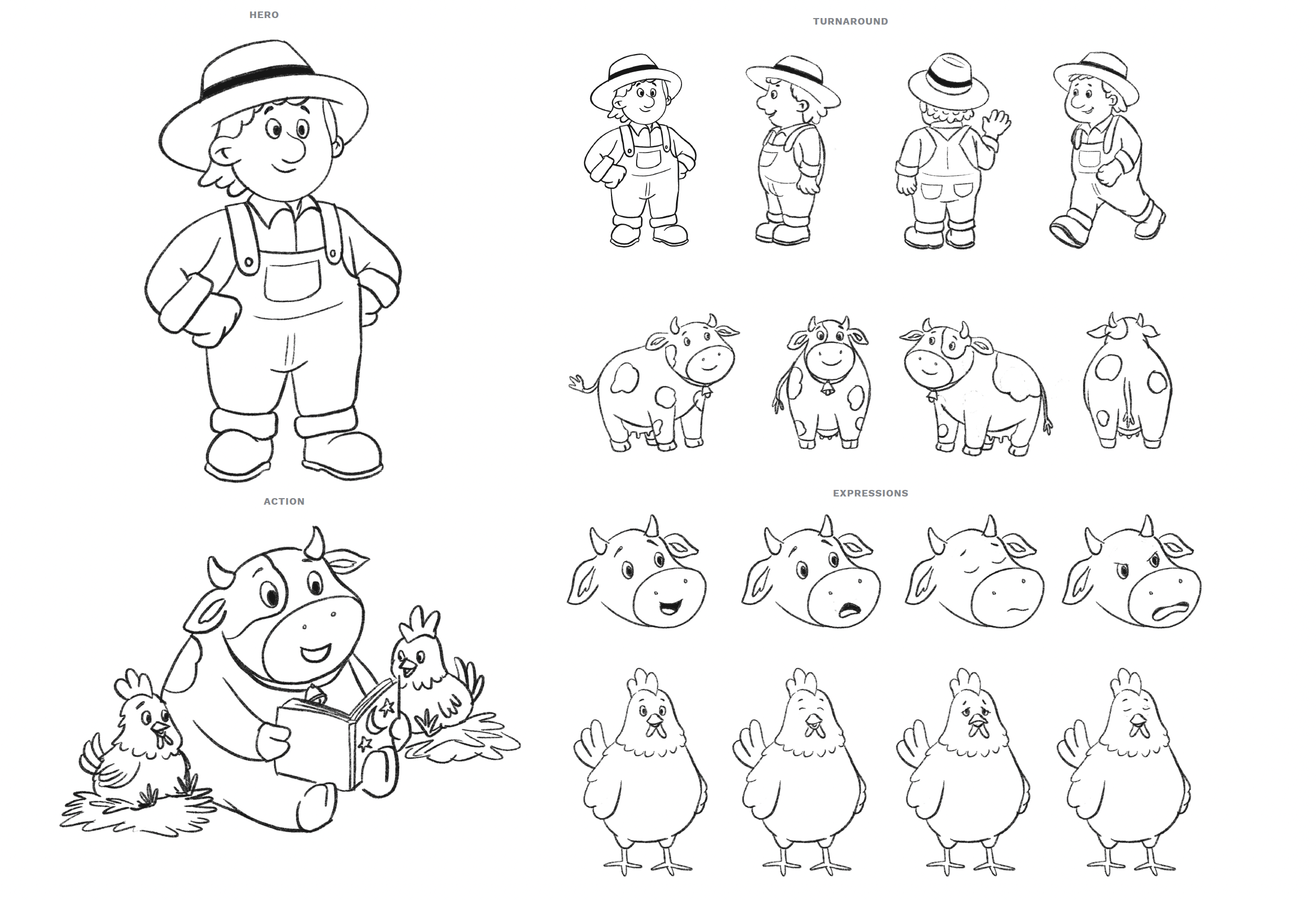
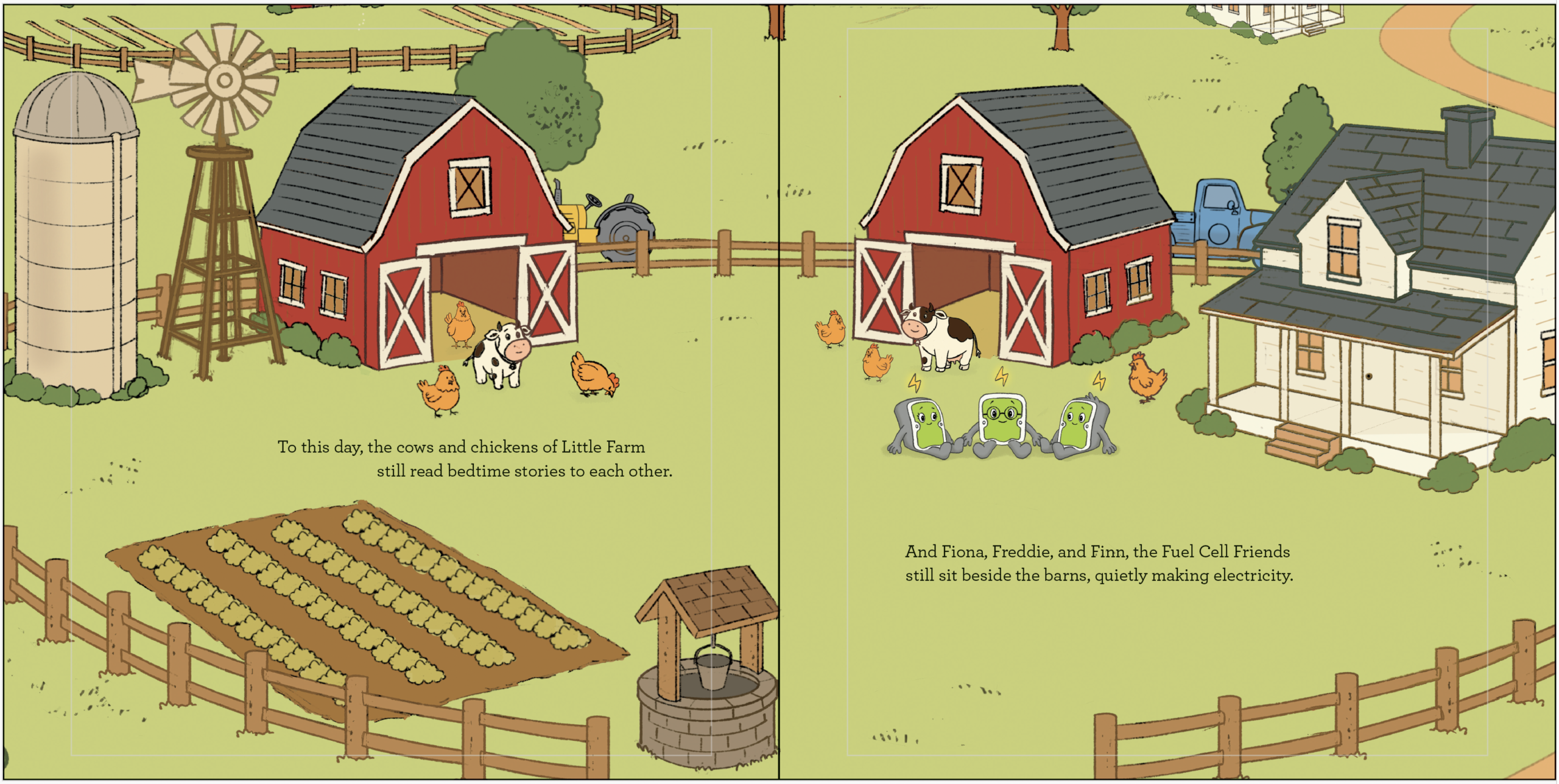
The fuel cells became Fiona, Freddie, and Finn: a trio of small, quiet heroes who make electricity while the rest of the valley sleeps.
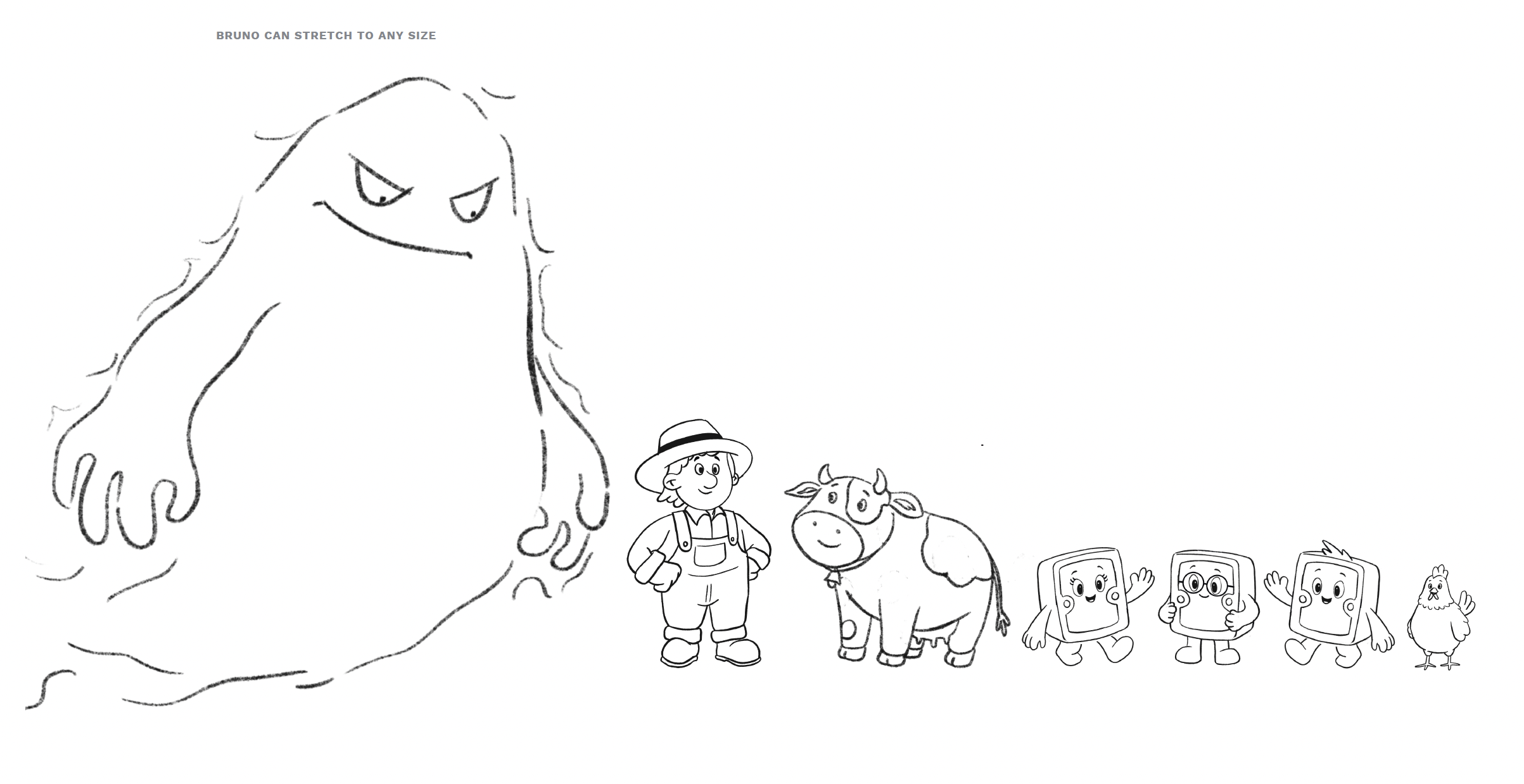
I developed a shared character shape, then gave each Fuel Cell Friend a distinct identifying feature and range of expressions. The direction was to keep them all the same color so each fuel cell needed a stand-out trait:
- Fiona has eyelashes
- Freddie wears round glasses
- Finn has a small tuft of hair
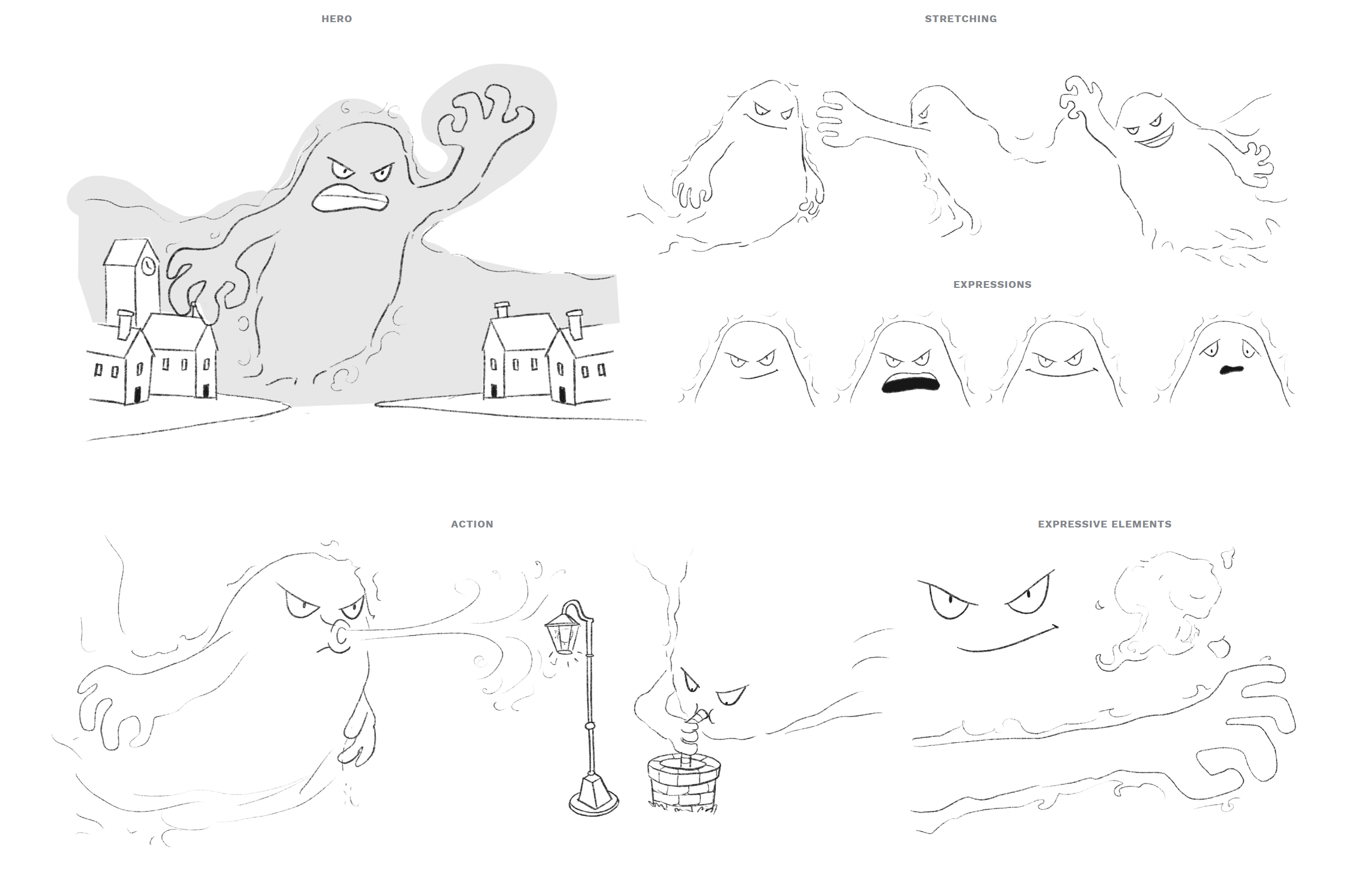
Creating a character sheet early means those marks and personalities stay clear and consistent across every scene. Character sheets by far is the most enjoyable phase of the picture book process for me.
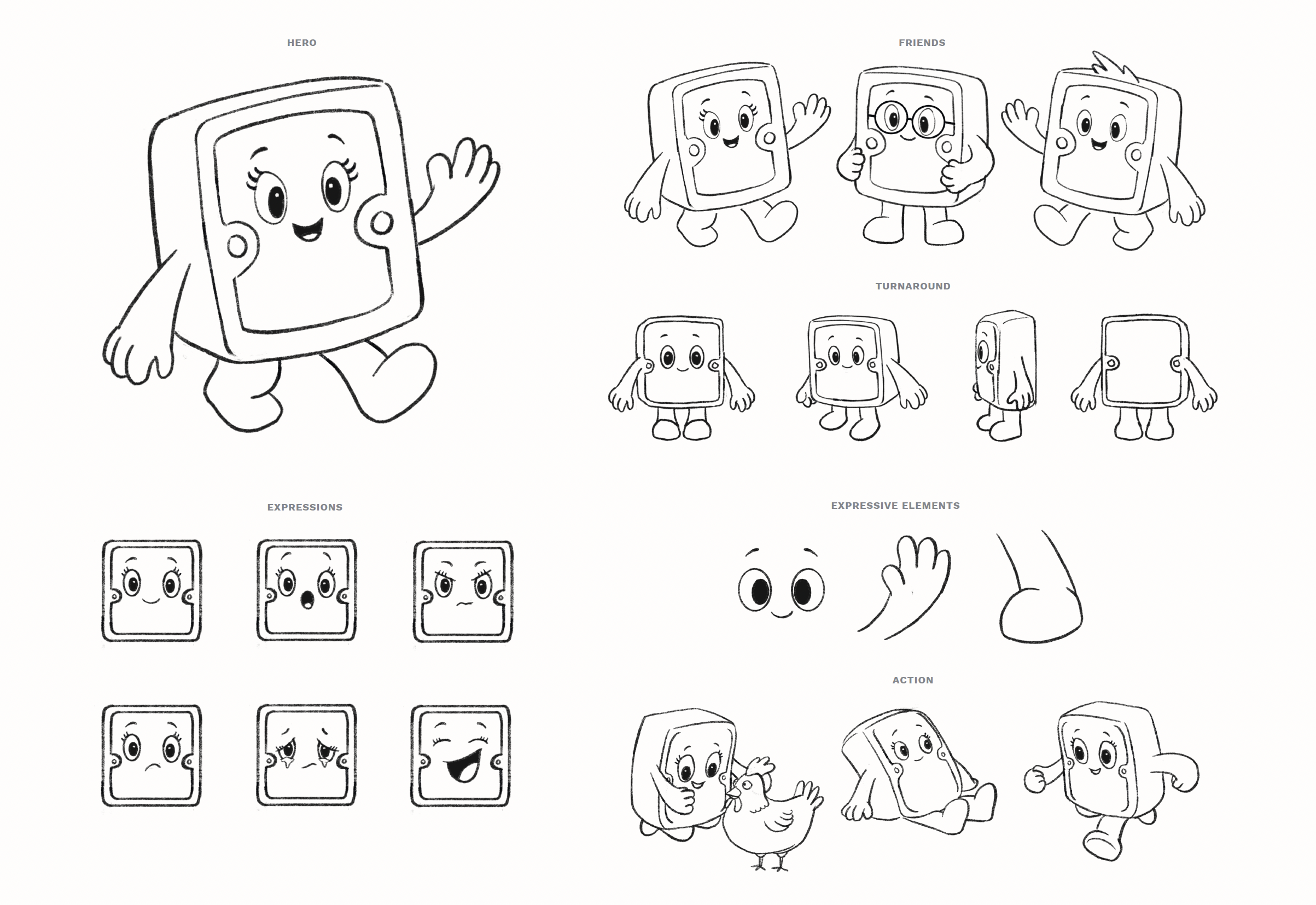
4. World-building: making the story easy to follow
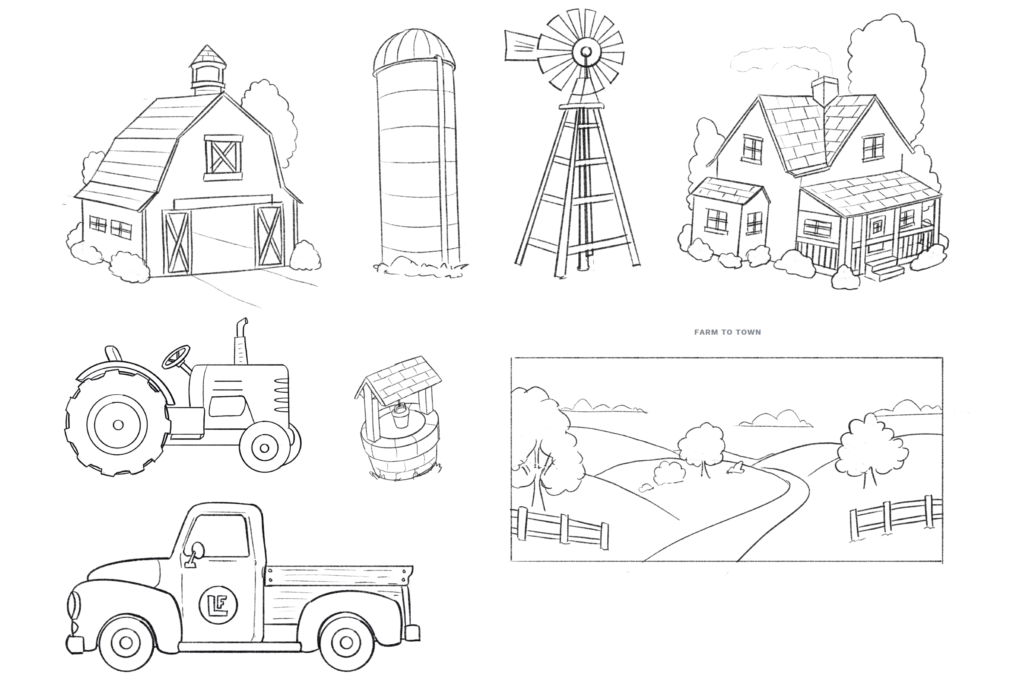
Picture books ask readers to understand a world quickly, so I establish the geography before illustrating individual scenes.
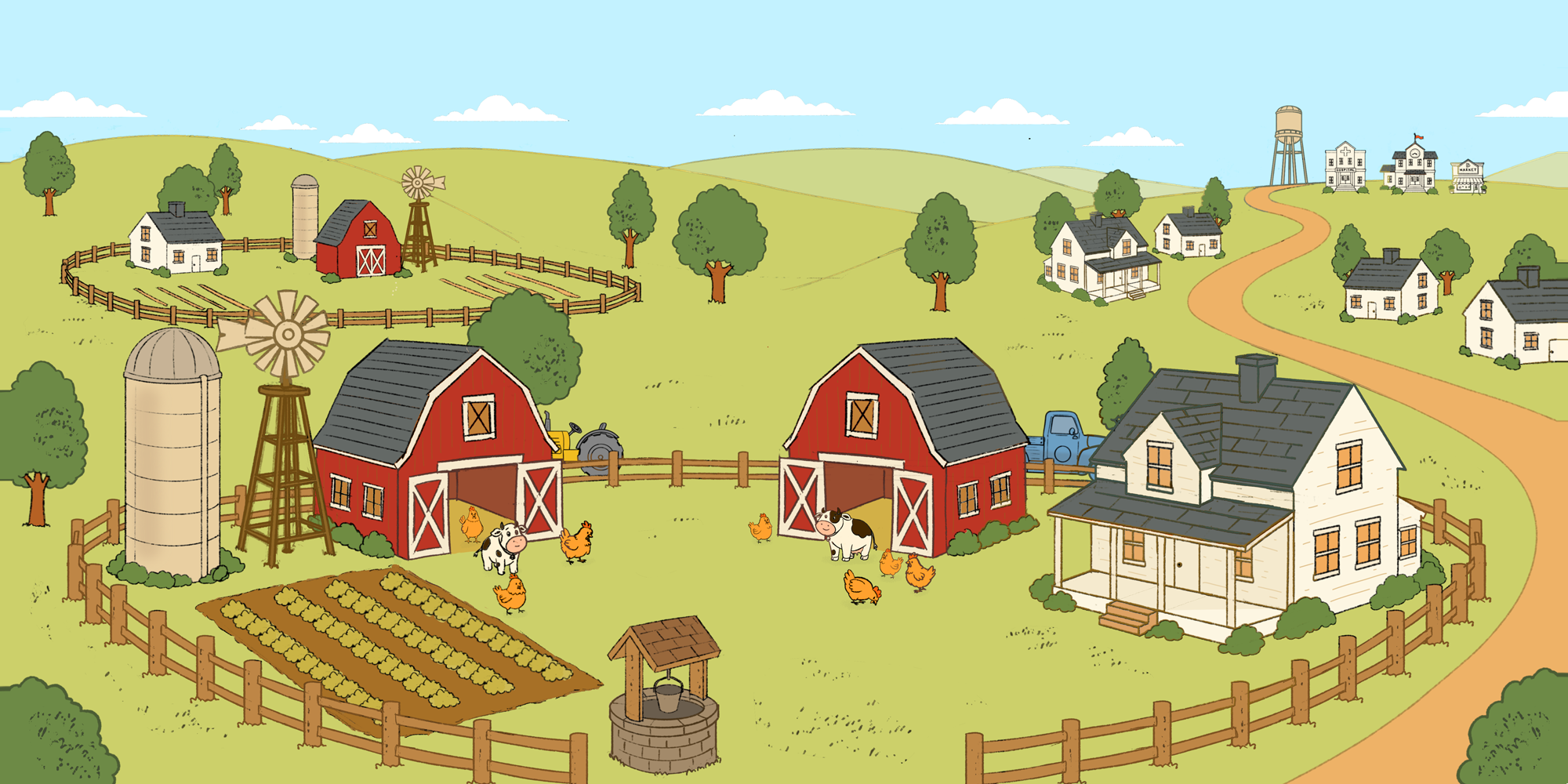
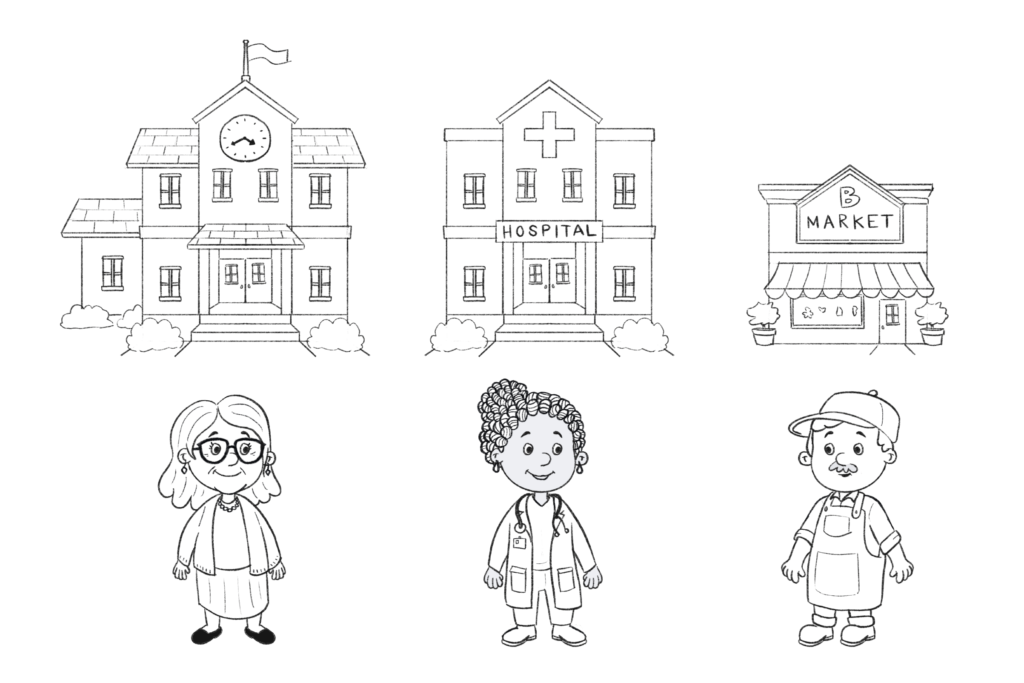
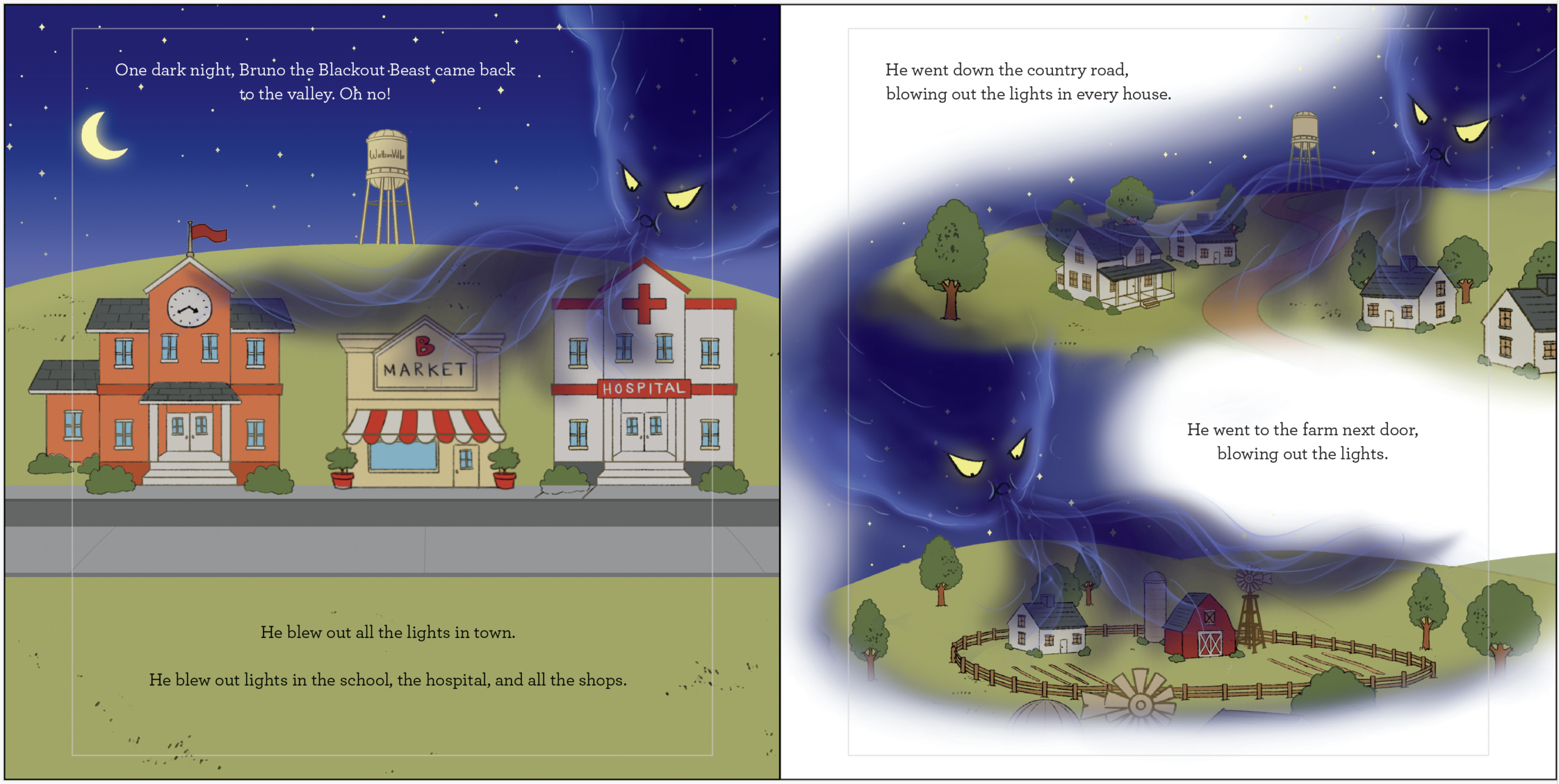
For Little Farm and WattsonVille, I mapped the farm, neighboring homes, country road, school, hospital, and town. Those landmarks remain consistent throughout the book. When Bruno causes a blackout, readers can follow the darkness moving through the valley. When the Fuel Cell Friends share power, they can see the lights return in reverse.
The world-building sheet became a guide for continuity and story clarity. This phase is where the final pieces come into place and it’s my job to make sure it all fits nicely.
5. Storyboard and illustration types: controlling the pace
A picture book is read one spread at a time, so the rhythm of images matters as much as the images themselves. I create a storyboard and visual pacing map to plan out how illustration compositions, page-turns, and pacing to complement and enhance the manuscript.
A visual pacing map show the illustration type that will be used for each spread:
- Double page – When you want the reader to slow down and take in all the details on the page.
- Single page – When
- Vignette – Shows the object with a little bit of background. Focus may be the moment or feeling in the environment.
- Spot – Focus on character or element: pace is fast with quick beats; imagine a sequence of moments or action.
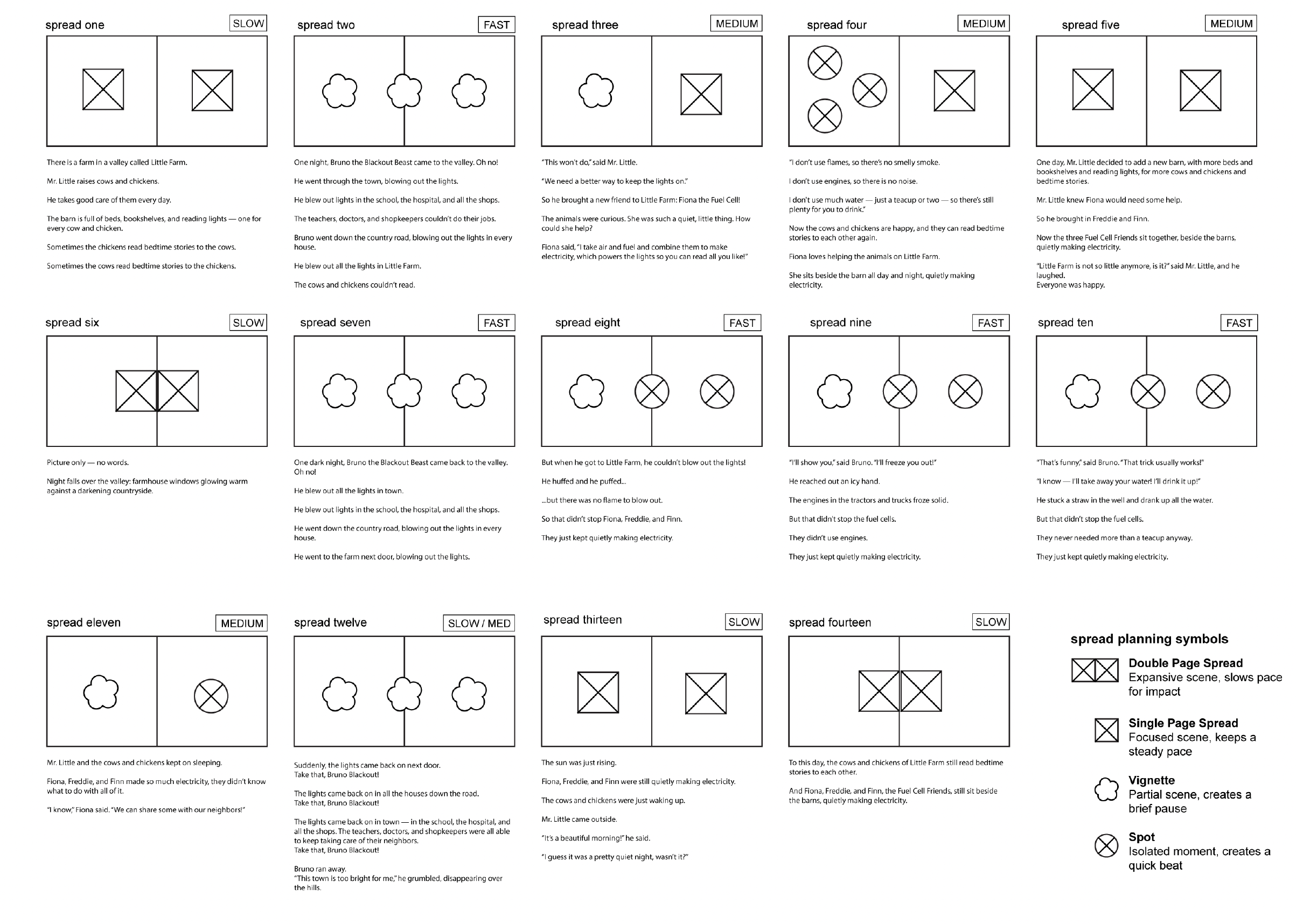
I used quick vignette sequences for Bruno’s fast-moving attempts to black out the valley. I reserved larger, quieter compositions for atmosphere, reveals, and emotional resolution. The night panorama slows the reader down; the final Little Farm spread gives the story space to settle.
6. Production renderings: bringing the system together
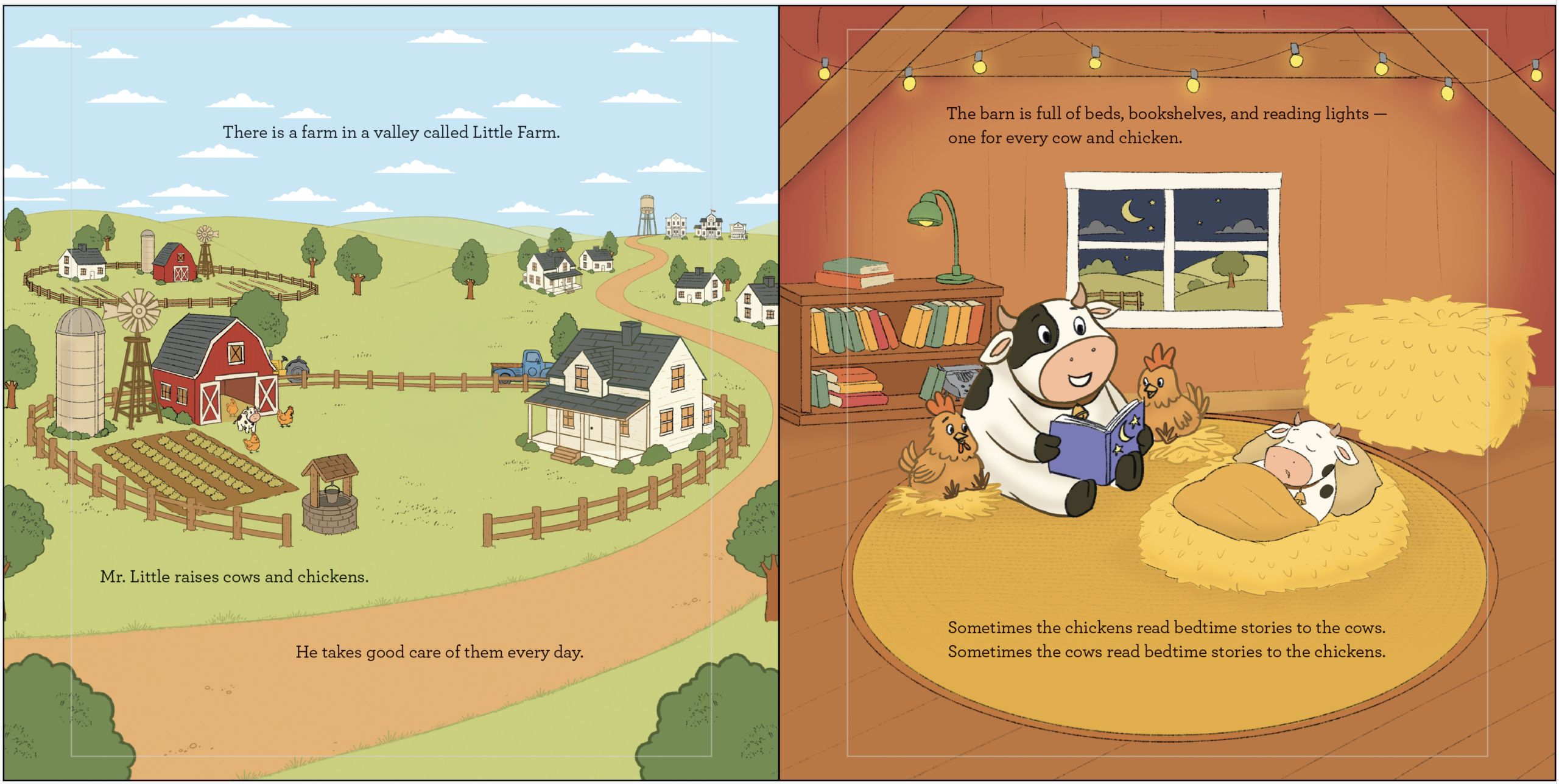
By the time I began the final illustrations, the essential decisions were already in place: the story’s visual tone, the characters’ personalities, the geography of the valley, and the pace of the read.
The final art could then focus on what picture books do best: atmosphere. emotion, and the small visual details that invite readers to stay in the world a little longer.
A process built for story
This is the part of picture-book making I love most: building enough structure that the final art can feel effortless.
For every project, my goal is the same. I want to make a world that is visually engaging, emotionally clear, and strong enough to carry a reader from the first page turn to the last. This book with Bloom Energy was fun to create and I’m happy to share the process in making these stories come to life.